

How to Empty a Spa: Step-by-Step Guide
Emptying a spa is simple when you shut power off, choose the right drain method for your setup, and send the water to a safe disposal point. This guide explains how often to change spa water, two ways to drain a spa (submersible pump or hose), where to send the water, and what to clean before you refill so your spa stays fresh and trouble free.
How often should you empty a spa?
Drain and refill most spas every 3 to 4 months, or sooner if the spa pool water turns dull, foamy, or has persistent odour. High bather load, heavy use of fragranced products, and warm weather increase dissolved solids and contaminants. If basic balancing starts to use more chemicals more often, it is usually time for a water change.
Signs you should change water now
- You need larger chemical doses to hold pH level and sanitiser
- Persistent cloudiness or foaming returns within days of treatment
- Strong odours despite correct free chlorine or bromine
- Test readings show high total dissolved solids compared with fresh fill
Do you need to turn off power before emptying a spa?
Always turn spa power off at the control panel and the circuit breaker before draining. Running circulation pumps and heaters without water can damage seals and elements. Confirm that jets do not start during the process and that the controller is fully off.
Power off checklist
- Shut the spa at the touchpad or topside control
- Turn the dedicated breaker off at the switchboard
- Unplug any plug in aromatherapy or lighting accessories
- Allow water to cool below 35 °C before you start
What is the best method to drain a spa?
Use a submersible pump for the fastest drain, or a drainage spigot, garden hose siphon, or the spa’s drain spigot for a slower, low cost option. Submersible pumps move water quickly and down to a lower residual level. Hoses and built in spigots are slower but require no extra gear.
Comparison at a glance
- Submersible pump: fastest, leaves only a shallow puddle to wet vac; needs a power source
- Garden hose siphon: very low cost, no power needed; slower and needs a downhill run
- Built in drain spigot: handy, but often slower due to narrow fittings
Can you empty a spa using a garden hose?
Yes. Fill the hose completely with water, cap the end with your thumb, place it below the spa waterline to start a siphon, and run the other end downhill to your disposal point. Secure the hose so the end stays submerged. If the hose climbs uphill at any point, the siphon stalls.
Garden hose steps
- Submerge the hose to fill it end to end
- Cover one end with your palm while still under water
- Move that end to the drain point while keeping the other end submerged
- Release your palm at the drain point to start flow
- Keep the hose downhill and kink free until the spa is empty
Do you need a submersible pump to empty a spa?
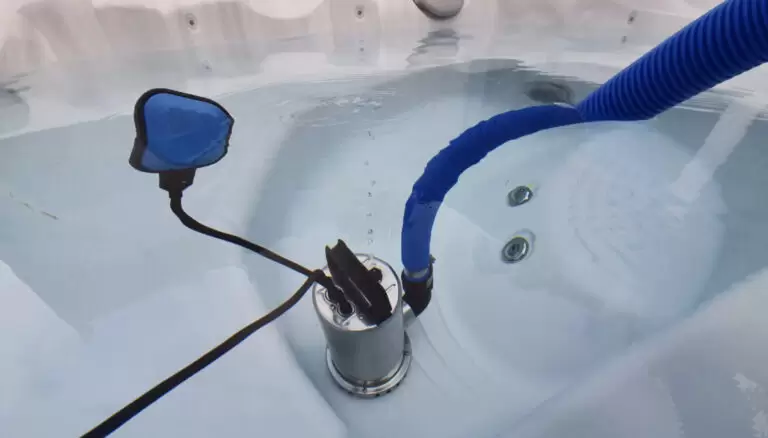
You do not need one, but a submersible pump empties a spa in a fraction of the time. A small pump can move thousands of litres per hour through a drainage hose. Place the pump inside on the spa floor, route the pump’s outflow hose to a safe drain, and run it until only a thin sheet of water remains.
Submersible pump steps
- Place the pump on a folded cloth to protect the shell
- Attach a discharge hose firmly so it does not pop free
- Keep the power cord and connection dry and away from wet areas
- Stop the pump with a few centimetres of water left and use a wet vac for the last bit
Where should you drain spa water?
Send spa water to a sewer system connection where allowed, or onto a well established lawn far from storm drains, waterways, and garden beds. Many councils prefer discharging to sewer so sanitiser and dissolved contaminants are treated. Avoid stormwater systems unless local rules allow it.
Smart disposal tips
- Neutralise chlorine or bromine first by allowing levels to drop or by using a neutraliser
- Let water cool so it does not scald grass or soften soils
- Spread flow across lawn to prevent pooling or erosion
- Never discharge near ponds, creeks, or gardens that are sensitive to salts
Can spa water damage grass or plants?
Yes if chlorine, bromine, or salt levels are high, or if the soil becomes waterlogged. Let sanitiser fall to near zero before draining, and spread the outflow over a wide area. Salt levels in some spas can stress plants, so prefer sewer disposal or choose a robust lawn area.
What should you do with leftover spa chemicals before draining?
Stop dosing a day or two before you drain and let sanitiser levels fall naturally, or use a neutraliser according to the label. Do not pour undiluted chemicals onto soil or into drains. Store containers upright in a cool, ventilated place until next use.
Should you clean the spa after draining?
Yes. Wipe the shell, clean the filters, and flush the jets and footwell before you refill. A quick clean removes films that would pollute new water.
After drain cleaning checklist
- Remove and hose the filter cartridge. Use a filter cleaner if oils or lotions have built up
- Wipe the spa shell with a spa safe cleaner and a soft cloth. Avoid harsh household cleaners
- Rinse the shell thoroughly with fresh water and wipe dry with a damp rag
- Clean the headrests and the underside of the cover. Let them dry before refitting
- If you have persistent biofilm, run a plumbing purge product before your next drain cycle and follow package instructions
How do you use the spa’s built in drain spigot?
Most portable spas include a primary spigot behind a panel and sometimes an auxiliary spigot inside the cabinet. The primary spigot usually accepts a standard garden hose. Always consult your owner’s manual for your spa model.
Basic spigot steps
- Turn off power and open the service door on the spa cabinet
- Unscrew the cap on the primary spigot and attach a garden hose
- Route the hose to your drain point and ensure it runs downhill
- Open the internal valve or pull the spigot to start flow
- When finished, close the valve, remove the hose carefully, and replace the cap without cross thread on the spigot’s threads
Why is your spa not draining?
Air locks, closed ball valves, clogged spigots, or a hose that runs uphill will stop flow. Check for kinks, open any internal bleed lines or valves, and make sure the hose has a steady downhill grade. If water trickles, switch to a submersible pump.
Do you need to remove all water from the internal lines?
For routine changes, no. For winterising or long shutdowns, yes. Routine draining focuses on the shell volume. For long downtime, blow water from internal bleed lines with a shop vac to prevent trapped water from going stale.
Can you empty a spa with the circulation pump and jets?
Do not rely on spa jets to drain, as you will need to avoid the hose uphill . Circulation pumps are designed to move water within the spa, not to push it to waste. Running them dry can damage seals. Use the drain spigot, a siphon, or a submersible pump instead.
How long does it take to empty a spa?
A submersible pump can empty a typical spa in well under an hour, while a hose siphon or a narrow spigot may take several hours. Swim spas take longer due to higher volume. Plan extra time for cleaning and for the refill.
Do you need to turn off the heater and chlorinator during a drain?
Yes. Make sure all heating and sanitising systems are off before you begin. Some controllers run automatic cycles. Confirm no scheduled program will start while the spa is empty.
Can you empty a spa in a saltwater system?
Yes. Treat it like a standard spa, but confirm where salt discharge is permitted. Salt water can harm sensitive plants and soils. Prefer sewer disposal when possible and watch for local rules.
Can you empty a spa into a septic system?
Avoid draining large volumes into a small household septic system unless a plumber approves it. Sanitiser and salt can disrupt bacterial action in small systems.
Step by step: the safest way to drain and refill a spa
Follow this sequence to protect equipment and get clear water on the first day.
- Stop dosing sanitizer
Let free chlorine or bromine drift down to near zero over 24 hours, or use a neutraliser. - Turn off power
Turn the spa off at the control panel and the circuit breaker. Let water cool below 35 °C. - Choose your drain method
Submersible pump for speed, garden hose siphon for simplicity, or the built in spigot for convenience. - Route the hose
Run the discharge hose to your sewer point or lawn. Keep every section downhill. - Drain the spa
Start the pump or siphon. Keep children and pets clear of the outflow. Stop with a shallow puddle remaining. - Clean the filters and shell
Remove the filter cartridge and hose it clean. Wipe the shell with a spa safe cleaner. Rinse and wipe dry. - Inspect fittings and jets
Check the filter compartment, suction covers, and jet faces. Replace cracked pieces and remove any trapped items. - Refill your spa
Place the hose in the filter compartment to fill through the plumbing and push air out of internal lines. Fill to the mark on the skimmer or to the manufacturer’s level line. - Restore power and bleed air
Turn the breaker and controller back on. Run circulation and open any bleed points to release air bubbles. Confirm flow at the jets. - Balance water
Test pH, alkalinity, and sanitiser. Adjust to target. Add a metal sequestrant if your fill water is prone to staining. - Heat and cover
Set the desired temperature and close the cover to hold heat. Recheck chemistry after the first heat cycle.
What should you avoid when cleaning an empty spa?
Avoid harsh household cleaners, abrasive pads, and strong solvents. These can damage the spa shell, seals, and cover. Use spa specific cleaners and soft cloths. Rinse thoroughly so residues do not react with chemicals after refill.
Can you drain a spa onto pavers or near the house?
Use care around structures. Large volumes of water can undermine paving or enter subfloor spaces. Direct flow away from buildings and soft edges, ensuring it flows on level ground . Keep electrical joins well above standing water.
Maintenance Tips

spa maintenance tips
Maintaining a spa is not a one-time event; it’s a series of ongoing battles against the forces of nature and wear. Regular water changes, routine filter cleaning, and vigilant chemical level monitoring are the trifecta that will keep your spa in peak condition.
Additionally Read – The Ultimate Guide to Maintenance Spa
Regular Water Changes
Changing your spa water is akin to changing the air in a kingdom; it rejuvenates and restores balance. Depending on the system you use, this should be done every 3-4 months for chlorine or bromine systems, or annually if you’re using a saltwater system. This ritual prevents the build-up of chemicals and contaminants, ensuring the water remains a clean and safe haven for relaxation.
Routine Filter Cleaning
Your spa’s filters are the valiant sentinels, tirelessly keeping the water free from invaders. Giving them a monthly deep clean with a filter cleaner will maintain their vigilance and efficiency.
Regular cleaning will extend the life of your filters and ensure they continue to protect your spa water with the same zeal as on their first day of duty.
Monitoring Chemical Levels
The final piece of the maintenance puzzle is to keep a watchful eye on your spa’s chemical levels. Regular testing is the scout that spots trouble before it strikes, ensuring a safe and comfortable spa experience. Adjusting these levels is like fine-tuning the harmony of a kingdom, keeping everything in balance and running smoothly.
Environmental Considerations
In the age of environmental awareness, even the simple act of draining your spa comes with the responsibility of considering the impact on our planet. Proper disposal of spa water and the potential to repurpose it for your garden are considerations that can help reduce your ecological footprint. It’s not just about the water you take out, but also about where it goes and how it’s treated.
Disposing of Spa Water
Disposing of spa water is a task that should be approached with care for our environment. Dilute and neutralize the chemicals before releasing the water, or better yet, enlist professional disposal services to ensure that it doesn’t harm the ecosystem.
Always check with your local regulations to navigate the legal landscape of water disposal and avoid any penalties.
Using Spa Water on Plants
If you fancy yourself a green thumb, consider reusing your relatively clean spa water for your lawn or garden, provided the chemical levels are low enough to not harm your plants. It’s a way to give back to nature, allowing your spa to nurture not just you, but also the plants around your home.
Just remember, this water is for non-edible plants only, as the chemicals can be harmful if ingested.
Summary
As we close the chapter on this comprehensive guide to spa maintenance, remember that the key to a pristine and long-lasting spa lies in regular and thorough care. From prepping to drain to refilling with fresh water, each step is integral to the process. Embrace these rituals, and you’ll be rewarded with countless soothing soaks in your personal oasis.
For expert spa services and to ensure your spa remains in top condition, trust 1 Pool Care. Contact us today to learn more about our comprehensive maintenance packages and how we can help keep your spa pristine and ready for relaxation.

With over 20 years of industry experience, Adrian Mole is the founder of 1 Pool Care, a leading mobile pool service in Perth. Known for his expert knowledge and reliable service, Adrian delivers professional pool cleaning, equipment repairs, and water balancing across the metro area. Backed by SPASA accreditation, he’s committed to quality, convenience, and customer satisfaction.


Social Media