



Green to Clean Pool
A green swimming pool is more than just an eyesore; it’s a red flag that your water has slipped out of balance. Murky water often means low chlorine, algae overgrowth, and neglected maintenance, all of which can turn a safe swimming spot into a breeding ground for bacteria.
Left untreated, algae spreads fast. In Perth’s hot summers, a pool can go from clear to swampy in as little as 24–48 hours. Chlorine becomes less effective at higher pH levels, and if storms dump dust, leaves, or rainwater into your pool, algae spores find the perfect conditions to multiply.
Before long, the water is unsafe for swimmers, the pool surface becomes slippery, and your filtration system struggles to keep up.
The good news?
Restoring a green pool is completely achievable with a structured, step-by-step approach.
In this guide, we’ll share 7 expert tips to transform your pool from green to sparkling clean.
You’ll learn the science behind algae growth, the right dosages and tools, and Perth-specific prevention tips for long-term clarity, so you can enjoy your pool year-round.
Already facing a stubborn case of green water? Check out the full article on How to Fix a Green Pool for Clear Water for additional treatment options.
What Causes a Pool to Turn Green?
A green pool is more than just unpleasant to look at. It’s a warning sign that your pool’s water chemistry, environment, or filtration system is out of balance.
Algae spores are always present in pool water, but when conditions are right, they multiply quickly and turn the water cloudy, murky, or even dark green.
To clean a pool properly, you must first understand the reasons why algae takes over. Below are the four most common causes of a green pool.
1. Insufficient Chlorine
Chlorine is the most important chemical in your pool. It works as a sanitiser, killing bacteria, destroying harmful microorganisms, and preventing algae from spreading.
If chlorine levels drop below 1 part per million (ppm), algae spores can grow unchecked. In warm weather, this can turn a crystal-clear pool into a green swamp in just 24–48 hours.
Why chlorine levels drop:
- Heavy rain: Rainwater dilutes chlorine, reducing its strength.
- Sunlight exposure: Strong UV rays in Perth break down chlorine quickly, especially when there isn’t enough stabiliser (cyanuric acid) in the water.
- Neglected dosing routines: Skipping weekly checks or forgetting to add chlorine allows algae to bloom.
Target range: Chlorine should be kept between 1–3 ppm at all times. Below this, algae have the perfect opportunity to grow and turn the water green.
2. pH Imbalance
Even when chlorine is present, it can become useless if the pH level is not in balance. The correct range for pool water is 7.2 to 7.6. Within this range, chlorine remains highly effective at killing algae.
But when the pH rises above this range, chlorine becomes much weaker. At a pH of 8.0, chlorine is up to 80% less effective. That means you could be adding plenty of chlorine, but most of it will not work against algae.
Common causes of pH imbalance:
- Heavy rainfall adds fresh water with different chemistry.
- Excess use of pool chemicals without testing first.
- Alkalinity that is too high or too low throws off the balance.
Tips: If your pool is green but chlorine levels seem fine, always check your pH first.
3. Environmental Triggers
The environment around your pool also plays a major role in algae growth. Even with the right chlorine and pH, environmental factors can overwhelm your system and lead to a green pool.
The main triggers are:
- Rain: Rain introduces dirt, organic matter, and debris into your pool. These become food for algae and increase the chlorine demand.
- Heat: Algae thrives in warm water. In Perth, when temperatures climb above 26°C (78°F), algae growth speeds up dramatically. Hot summer days make pools especially vulnerable.
- Debris and organic matter: Leaves, twigs, and dust that settle in the pool begin to decompose. As they break down, they release nutrients like nitrates and phosphates, which algae use to grow even faster.
In Perth, this is especially common after storms, when pools are left with dust, leaves, and rainwater that throw off the balance.
4. Inadequate Filtration and Circulation
Even with perfect chlorine and pH levels, a pool can still turn green if the filtration and circulation system is not doing its job. The filter removes dirt and dead algae, while the pump keeps water moving so chemicals are evenly distributed. When these systems fail, algae spores settle in still areas and grow quickly.
Common problems include:
- Clogged or dirty filters: A blocked sand, DE, or cartridge filter cannot remove fine debris and algae effectively.
- Pumps not running long enough: To keep water clean, most pools need 8–12 hours of circulation per day. Running the pump for fewer hours leaves dead spots where algae can grow unchecked.
- Neglect during holidays: Many Perth pool owners reduce pump run times during the summer break to save on electricity. Unfortunately, this creates stagnant water at exactly the time when pools are used the most and algae growth is at its peak.
Good circulation is just as important as chemical balance. Without it, chlorine cannot reach every part of the pool, and algae will always find a place to grow.
The 7 Steps from Green to Clean
A green swimming pool is more than an eyesore; it’s a warning that your pool’s water chemistry and maintenance routines have fallen behind.
Algae blooms, chemical imbalances, and weak circulation are the most common culprits, and once they take hold, they can quickly overwhelm your pool.
The good news is that with the right systematic approach, you can transform a murky, algae-filled pool into sparkling, safe water.
Whether your pool is a light shade of green or so dark you can’t see the bottom, the following seven expert steps will bring it back to life.
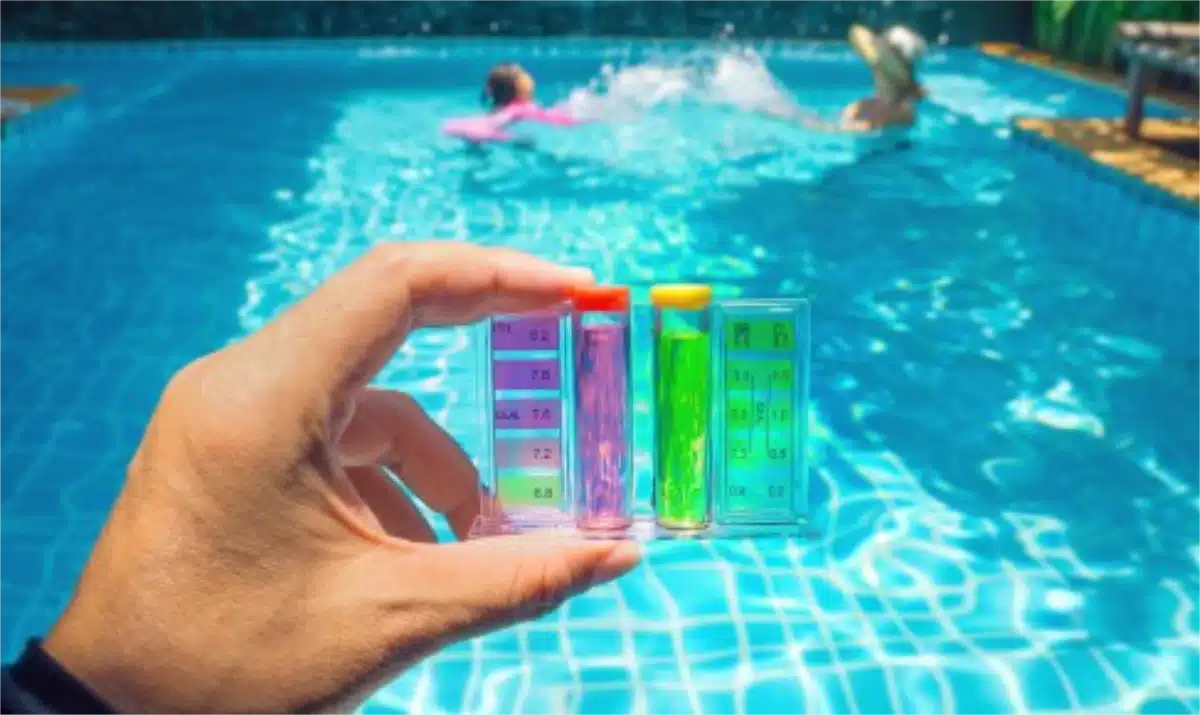
Step 1: Test and Balance Water Chemistry
The first step is to test your pool water. Without balanced chemistry, chlorine and other treatments will not work properly.
Why this step matters:
Algae thrives when chlorine is weak or locked up, and this often happens because of imbalanced pH, alkalinity, or stabiliser levels. Testing ensures the right environment for treatment.
What to test:
- Chlorine: Maintain 1–3 ppm for sanitisation.
- pH: Keep between 7.2–7.6. Below this range, water becomes too acidic and corrosive. Above this range, chlorine becomes almost useless.
- Alkalinity: Target 80–120 ppm to keep pH stable.
- Cyanuric Acid (Stabiliser): Maintain 30–50 ppm to protect chlorine from UV breakdown. If it rises above 50 ppm, a chlorine lock can occur.
Pro Tip:
If the stabiliser is too high, dilute the water by draining and refilling part of the pool.
Pros and Cons:
| Pros | Cons |
|---|---|
| Accurate water balance improves chlorine efficiency | Requires regular testing and adjustment |
| Prevents wasted chemicals and extra costs | High stabiliser levels may require draining |
| Creates a safe swimming environment | Neglect leads to recurring algae problems |

Step 2: Brush Pool Surfaces
Once your pool water is balanced, the next step is to physically remove algae from surfaces. Algae attaches itself firmly to walls, steps, and corners of the pool, creating a protective layer that chemicals alone cannot penetrate. Brushing is required to break this layer and expose algae to chlorine.
Why this step matters:
Algae form a slimy biofilm that resists chemical treatment. Brushing disrupts this coating, allowing chlorine to reach and kill the spores more effectively. It also prevents dead algae from staying on pool surfaces, where it can cloud the water and clog the filter.
How to brush effectively:
- Stainless steel brush: Best for concrete or plaster pools.
- Nylon brush: Safe for fibreglass or vinyl pools to prevent scratching.
- Technique: Start at the waterline and brush downward. Cover all walls, steps, and the pool floor.
- Focus areas: Pay extra attention to shaded corners, steps, and ladders, as these spots have weaker circulation and are algae hotspots.
Pro Tip
Brushing should be done daily during treatment. For severe algae infestations, brushing multiple times a day can speed up recovery.
Pros and Cons:
| Pros | Cons |
|---|---|
| Exposes algae to chlorine for faster results | It can be tiring, especially for large pools |
| Improves water clarity by removing dead algae | May scratch surfaces if the wrong brush is used |
| Helps prevent cloudy water | Needs to be repeated during treatment |

Step 3: Vacuum the Pool
Once algae has been brushed off the walls and floor, it must be physically removed from the water. If it is left to circulate, it will settle back onto surfaces and continue feeding future algae blooms. Vacuuming is a critical step in preventing this.
Why this step matters:
Brushing only loosens algae; vacuuming ensures it is collected and taken out of the pool system. Without this step, algae particles remain suspended in the water, clogging the filter and undermining chemical treatments. Proper vacuuming reduces chlorine demand and speeds up the cleaning process.
Vacuuming options:
- Manual vacuuming: Provides full control and precision. Recommended for smaller pools or when algae infestations are heavy.
- Automatic cleaners: Save time and effort. Best for maintenance cleaning, but often less effective against large amounts of algae.
Best practice:
- If the algae problem is severe, set the filter to waste mode while vacuuming. This bypasses the filter and sends dirty water straight out of the system, preventing clogging.
- For lighter infestations, vacuum on the filter setting. This allows the system to trap debris and maintain water levels.
Pro Tip
Always check water levels after vacuuming on waste mode, as the pool may require topping up.
Pros and Cons:
| Pros | Cons |
|---|---|
| Physically removes algae and debris | Waste mode drains water, requiring a refill |
| Prevents algae from re-entering the system | Manual vacuuming is time-consuming |
| Improves filtration efficiency | Automatic cleaners may struggle with heavy algae |

Step 4: Shock the Pool
Shocking is the process of adding a large dose of chlorine to oxidise algae, bacteria, and organic debris. It is the most important step in turning a green pool clear again.
Why this step matters:
Algae spores are resilient and can survive normal chlorine levels. By “super-chlorinating” the water, you overwhelm the algae and bacteria, killing them quickly. Shocking also removes organic contaminants that cloud the water and cause unpleasant odours.
How to prepare:
Before shocking, adjust the pH to 7.2–7.6. Chlorine is most effective within this range. If the pH is too high, the chlorine will be far less powerful, even if added in large amounts.
Algae Severity-Shock Dosage
- Light Green: 1 kg per 50,000 litres
- Heavy Green: 2–3 kg per 50,000 litres
Application:
- Dissolve or spread the shock evenly around the pool to avoid bleaching in one spot.
- Run the pump continuously for at least 24 hours to circulate the treatment.
- Do not swim until chlorine levels drop back to a safe range of 1–3 ppm.
- For heavily contaminated pools with a lot of organic matter, a second shock treatment may be required if the first dose is neutralised too quickly.
Pro Tip:
Use liquid chlorine for faster action in very dark green pools, but stick to calcium hypochlorite for steady treatment and affordability.
Pros and Cons:
| Pros | Cons |
|---|---|
| Rapidly kills algae and bacteria | High chlorine levels make the pool unsafe temporarily |
| Clears green water effectively | May require multiple treatments for severe algae |
| Restores sanitation quickly | Can bleach liners if not applied correctly |

Step 5: Run Pump and Filter Continuously
Killing algae is only half the job; once the algae has been destroyed by shock treatment, it remains in the water as tiny particles.
If these particles are not filtered out, the pool will stay cloudy, and algae can resettle. This is why continuous filtration is one of the most important steps in turning a green pool clear.
Why this step matters:
The pump and filter act as the pool’s cleaning system. They remove dead algae, dirt, and debris while keeping chemicals evenly circulated throughout the water.
Without proper circulation and filtration, chlorine cannot reach all areas of the pool, and “dead spots” can become breeding grounds for algae again. Running the system continuously ensures that every drop of water is treated and cleaned.
Filtration tips:
- Pump run time: Operate the pump for at least 48 hours non-stop immediately after shocking.
- Sand and DE filters: Perform backwashing frequently to flush out trapped debris.
- Cartridge filters: Remove cartridges and hose them down whenever the pressure rises noticeably.
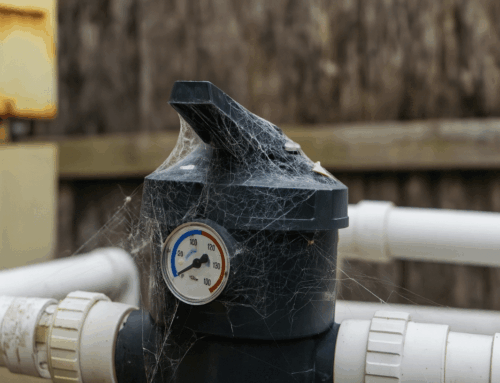
- Pressure gauge monitoring: Always check the gauge. A sudden rise means the filter is clogged and needs cleaning or backwashing.
Pro Tip:
During algae treatment, do not reduce pump runtime to save on electricity. Continuous circulation at this stage is critical for fast, clear results. Once the water is clean again, you can return to your regular daily cycle of 8–12 hours.
Pros and Cons:
| Pros | Cons |
|---|---|
| Clears dead algae, leaving water sparkling clean | Increases electricity consumption |
| Maintains strong circulation and balanced chemistry | Requires frequent filter maintenance |
| Prevents algae from settling back into the pool | Older pumps may struggle with long runtimes |

Step 6: Use Clarifiers or Flocculants
Even after shocking the pool and running the filter, water can stay cloudy. This is usually caused by fine particles that are too small for the filter to capture.
Clarifiers and flocculants are finishing treatments that give the water a crystal-clear appearance.
Why this step matters:
Dead algae and fine debris often remain suspended in the water after treatment. Without additional help, these particles can keep the pool looking dull or cloudy even though it is technically clean.
Clarifiers and flocculants make these particles easier to remove so your pool regains its sparkle.
How they work:
- Clarifiers: Bind tiny particles into larger clusters so that the filter can trap them more effectively.
- Flocculants: Cause fine debris and particles to clump together and sink to the bottom of the pool, where they can be vacuumed out manually.
Best practice:
- Use clarifiers when water is only slightly cloudy and you want the filter to handle the clean-up.
- Use flocculants for stubborn particles that normal filtration cannot remove. After using a flocculant, always vacuum the debris from the bottom.
- Always clean or backwash the filter after using these products to prevent blockages.
Pro Tip:
Choose clarifiers for routine polishing after shocking. Reserve flocculants for severe cases where the pool remains murky, but remember they require extra vacuuming work.
Pros and Cons:
| Pros | Cons |
|---|---|
| Speeds up water clearing | Overuse may clog the filter |
| Effective when filters struggle with fine particles | Flocculants require vacuuming after use |
| Provides a crystal-clear finish | Adds extra cost to the treatment process |
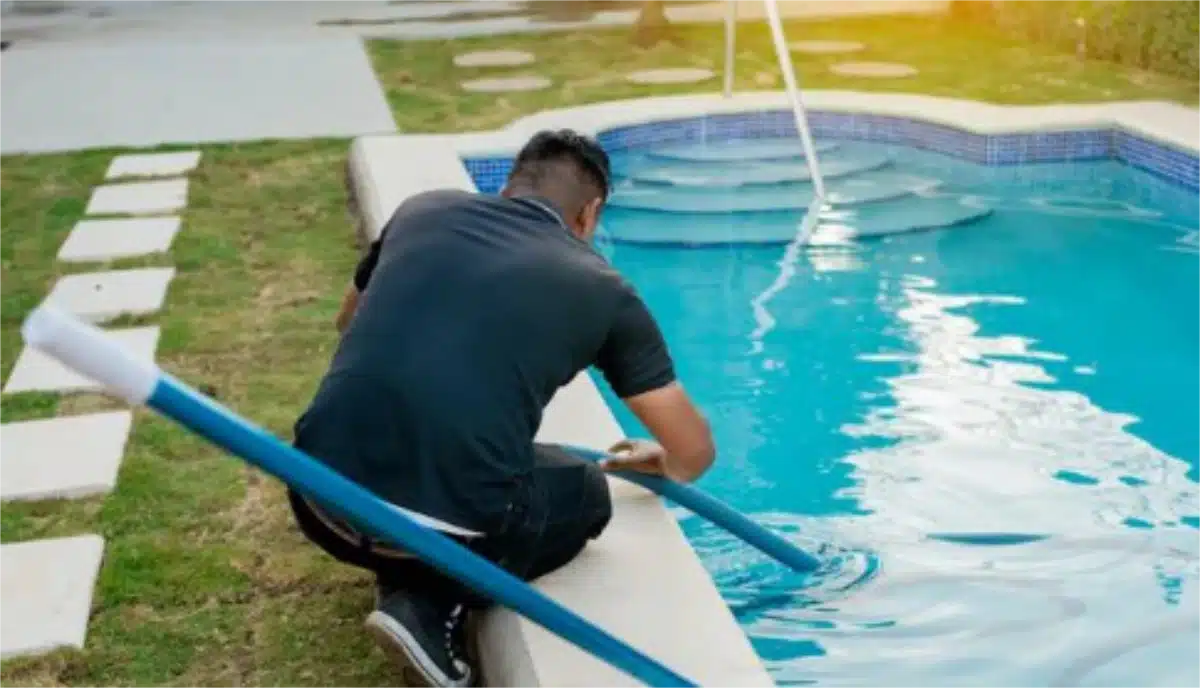
Step 7: Prevent Future Algae Growth
Once the pool is clear, the final step is prevention. Algae spores are always present in water, and Perth’s hot climate, with long summers and high UV exposure, makes algae prevention especially important.
A consistent routine is the only way to ensure your pool stays clean and safe year-round.
Why this step matters:
Even after thorough cleaning, algae will return if conditions allow it. Warm weather, unbalanced water, and poor circulation all create an environment where algae can bloom within days.
Prevention reduces the need for costly shock treatments and protects your pool’s surfaces and equipment from long-term damage.
Prevention checklist:
- Test water chemistry every 3–5 days in summer. This ensures chlorine and pH remain in the safe range.
- Maintain chlorine between 1–3 ppm and pH between 7.2–7.6. This keeps water sanitised and algae under control.
- Skim debris daily. Removing leaves and dirt before they decompose prevents organic matter from feeding algae.
- Brush and vacuum weekly. This disrupts algae spores before they can establish on walls or steps.
- Run the pump 8–12 hours daily during peak swimming season to keep water circulating properly.
- Add a preventative algaecide periodically. Use it as a support for chlorine, never a replacement.
Pro Tip:
Prevention is far easier and cheaper than fixing a green pool. A regular 10-minute checkup routine saves hours of cleaning and the cost of heavy chemical treatments later.
Pros and Cons:
| Pros | Cons |
|---|---|
| Keeps pool safe and clear year-round | Requires consistency and effort |
| Reduces the need for expensive shock treatments | Preventative chemicals add to costs |
| Protects pool surfaces and equipment | Neglect leads to a quick algae return |
Common Mistakes Pool Owners Make
Cleaning a green pool is a step-by-step process, and skipping or rushing through steps often leads to failure. Many pool owners in Perth unknowingly repeat the same mistakes, which delay recovery and waste chemicals.
Understanding these mistakes and how to avoid them can save time, money, and frustration.
1. Waiting Too Long Before Treatment
One of the biggest mistakes is ignoring the early signs of algae. A slightly cloudy or light green pool may not seem urgent, but in Perth’s hot climate, algae can multiply quickly.
Within 24–48 hours, a pool can go from a light tint to a dark green swamp. The longer the treatment is delayed, the more chlorine, brushing, and filtration will be needed to restore clarity.
2. Using the Wrong Shock Dosage
Shock treatment is the key to killing algae, but many pool owners get the dosage wrong. Using too little chlorine means the algae will survive and regrow, wasting both time and chemicals. Using too much can damage pool surfaces, fade liners, or keep chlorine at unsafe levels for several days.
The correct dosage depends on pool size and algae severity—light cases need about 1 kg per 50,000 litres, while heavy infestations require 2–3 kg.
3. Forgetting to Brush After Shocking
Shock kills algae in the water, but it does not remove the algae that sticks to pool walls, steps, and ladders. Without brushing, algae can remain attached in a slimy layer called biofilm, which protects it from chemicals.
Dead algae left on surfaces can also make the water cloudy. Brushing after shocking ensures chlorine reaches all surfaces and prevents algae from coming back.
4. Running the Filter Too Few Hours
To save on power costs, many pool owners cut back on pump run times. However, filtration is just as important as chemicals in clearing algae. Without enough circulation, chlorine does not spread evenly, and dead algae remains in the water.
After shocking, the pump should run continuously for 24–48 hours, and during summer, filters should operate 8–12 hours daily to prevent algae from settling.
Weekly Maintenance Routine
Keeping your pool clean is not just about fixing problems when they appear. A simple weekly routine helps prevent algae, keeps water chemistry balanced, and reduces the need for costly treatments.
Perth’s hot summers and strong sunlight make consistency especially important.
By following these steps, you can maintain a safe and sparkling pool all year round.
- Test Water Chemistry: Check chlorine and pH every 3–5 days to ensure water stays balanced and chlorine remains effective.
- Skim Debris Daily: Use a skimmer net to remove leaves, dirt, and dust before they decompose and feed algae.
- Brush and Vacuum Weekly: Scrub walls, steps, and corners to disrupt algae growth, then vacuum to remove debris from the pool floor.
- Maintain Filtration: Run the pump for 8–12 hours a day during swimming season and clean or backwash filters regularly.
Use Algaecides: Apply preventative algaecides periodically, especially in summer. They work best as a supplement to chlorine, not a replacement.
Case Study: From Green to Pristine in 48 Hours
Problem:
- A primary school swimming pool had turned green and murky due to algae.
- The pool pump was faulty, overheating, and switching off after 45 minutes.
- Leaking return pipes were temporarily patched with a flexible pipe, still in use years later.
- Water circulation was very limited, making chemical treatment difficult.
Steps Taken:
- Improvised circulation: Attached a custom Hoover hose setup to maintain limited water flow despite pump failure.
- Chemical treatment: Added liquid chlorine (sodium hypochlorite) and flock granules while running the system on recirculate to avoid clogging the sand filter.
- Resting period: Allowed chemicals to circulate for 30 minutes, then left the pool for two days to let algae settle as sediment.
- Vacuuming to waste: Returned after 48 hours to carefully vacuum dead algae and sediment from the pool floor without disturbing it, topping up water as needed.
Result:
- In just 48 hours, the pool transformed from green and unusable to blue and nearly clear.
- Flock granules successfully bonded fine particles, dropping them for removal.
- After pump repair, the filter will finish polishing the water to crystal clear swimming quality, ready for school use, and also check out the transformation from Green to Pristine.
Frequently Asked Questions
To Sum Up
A green pool is a sign of chemical imbalance and algae growth, but with the right steps, testing, brushing, shocking, filtering, and prevention, you can restore clear, safe water within 24–48 hours. Consistent maintenance is the best defence against algae, especially in Perth’s hot climate.
Need fast, professional help? Contact 1 Pool Care today for expert green pool cleaning in Perth and keep your pool crystal clear all year round.

With over 20 years of industry experience, Adrian Mole is the founder of 1 Pool Care, a leading mobile pool service in Perth. Known for his expert knowledge and reliable service, Adrian delivers professional pool cleaning, equipment repairs, and water balancing across the metro area. Backed by SPASA accreditation, he’s committed to quality, convenience, and customer satisfaction.





Social Media