
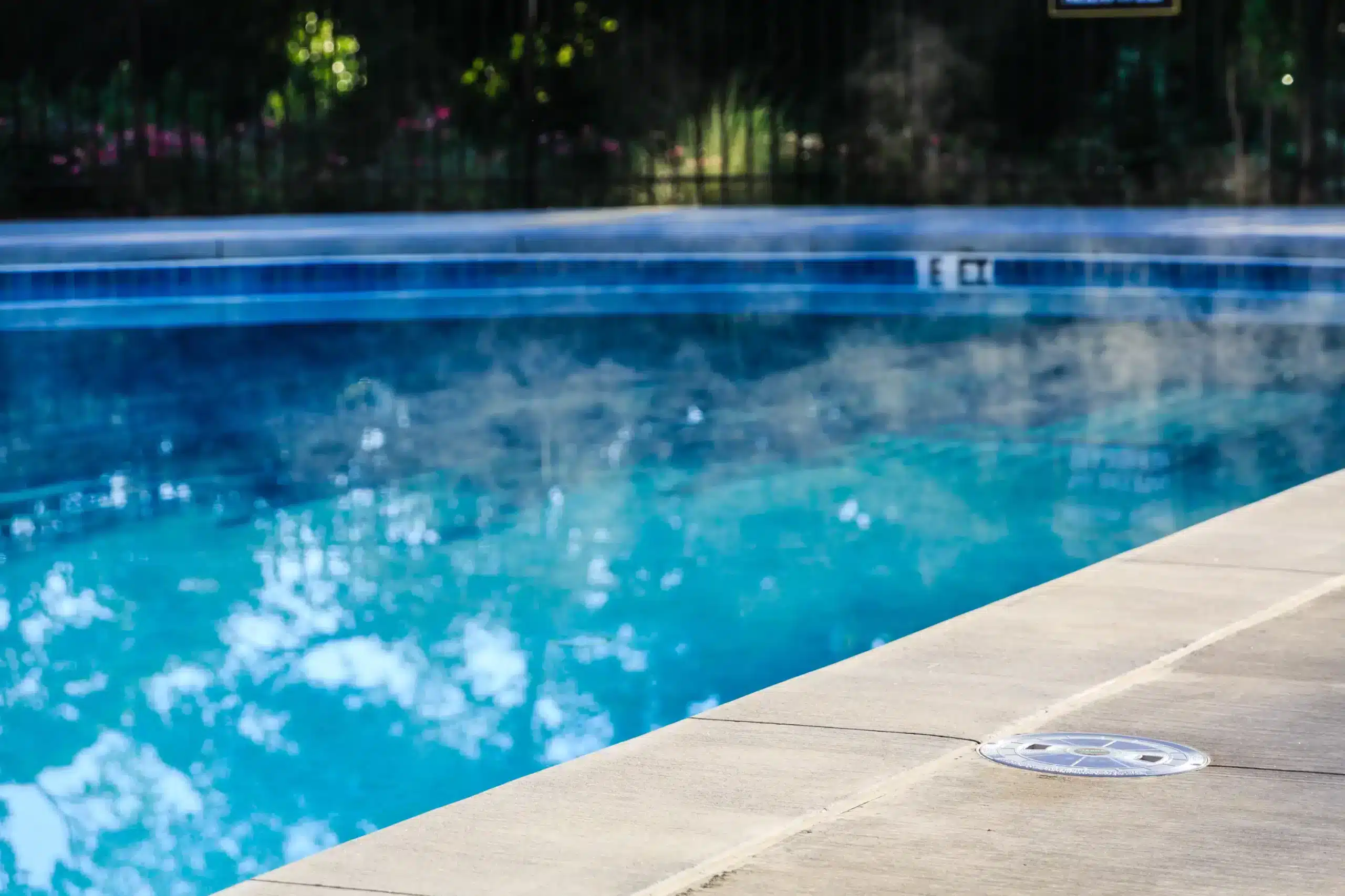
How much does pool heating cost depends on the type of pool heater you choose, your pool size, the local climate and how well you retain heat overnight. In Perth we install gas heaters, heat pumps, solar pool heating systems and electric pool heater units across suburbs from Burns Beach to Rockingham. The pool heating cost varies, but understanding each system helps pool owners avoid bill shock and get the most from their swimming pool. This guide breaks down monthly costs, one day scenarios and the factors that push heating costs up or down. For installation, repairs and pricing, see our pool heating page.
What Are The Different Types Of Pool Heaters
Three main pool heating options cover most residential pools. A gas pool heater burns natural gas or LPG to generate heat through a heat exchanger and raises water temperature fast. An electric heat pump extracts warmth from outside air and transfers it into pool water using a refrigerant cycle, delivering more heat per unit of electricity than any other heating system. A solar pool heater uses roof mounted solar collectors where water passes through panels heated by the sun, and the cost of solar pool heating after installation is close to zero because the free energy from sunlight replaces electricity or gas. An electric pool heater uses resistance elements to heat water directly, drawing high power and running up electricity costs quickly. Standard pumps on older pools may also need upgrading to handle the flow demands of a new heating system. For most Perth pools, a pool heat pump or solar heating system delivers the best balance of upfront and ongoing costs.
What Is The Average Cost To Heat A Pool Per Month
Monthly heating costs swing widely depending on pool size, desired temperature and whether you use a pool cover. For a standard 40,000 litre swimming pool set to 27 degrees, solar pool heating cost runs $10 to $30 per month in pool pump electricity alone. A heat pump costs $60 to $180 per month with a pool blanket or $150 to $400 without one. Gas heating sits between $200 and $600 per month depending on usage. Electric pool heating is the most expensive at $500 to $1,200 per month, which is why we rarely recommend it for full size pools. These figures reflect Perth’s warmer climate where air temperature supports efficient heat pump operation for most of the year.
How Much Does It Cost To Heat A Pool For One Day Or A Weekend
For a single day heating session on a 40,000 litre pool, a heat pump costs roughly $7 to raise the water 2 degrees. Gas costs around $11 for the same result. Holding temperature over a weekend with a pool cover adds about $3.50 per night on a heat pump and $5.50 on gas. Halve those numbers for a 20,000 litre pool. The practical approach is to start the heat pump mid week, maintain with a blanket and only fire up gas if you need a quick boost before guests arrive.
Does Pool Size Change Heating Costs A Lot
Yes. A larger pool holds more water and needs more energy to reach and hold the desired temperature. A 60,000 litre pool costs roughly 50 percent more to heat than a 40,000 litre pool under the same conditions. Surface area also matters because that is where heat escapes to cooler air. Pools with large shallow areas lose more heat than compact deeper pools. If you are heating an existing pool that cools fast, oversizing the heater shortens recovery time and reduces the hours the system runs each day.
Which Is Cheaper To Run Gas Vs Heat Pump Vs Solar
Solar delivers the lowest running costs when sun is available because the energy is free. A well sized solar heating system on a north facing roof with enough power from the pool pump to circulate water through the panels runs at near zero cost beyond electricity for the pump. Heat pumps are cost effective above about 15 degrees air temperature, and Perth rarely drops below that even in July. Gas heaters generate heat the fastest but at the highest hourly cost. Over a full swimming season, a modern inverter pool heat pump provides lower running costs than gas by a factor of three to four. We installed a Madimack inverter unit for a family in Carine whose old gas heater had been costing over $1,400 a year. After the switch their annual heating costs dropped below $500 with year round swimming included.
How Much Does A Pool Cover Save On Heating Costs
A pool cover cuts evaporation by 70 to 90 percent, and evaporation is the single biggest source of energy loss from any heated pool. A fitted solar pool blanket can retain heat overnight, stabilise pool water temperature and reduce chemical use. Without a cover, the heater runs twice as long to replace what escapes. We recommend a 500 micron cover as the minimum for any pool heating system in Perth because it pays for itself in lower energy bills within the first season.
How Does Climate And Season Affect Pool Heating Costs
Colder air temperature and wind increase heat loss and push up run time. In Perth’s spring and autumn, heat pumps and solar handle the load comfortably. Mid winter from June through August is where gas earns its place for short sessions or where a heat pump paired with a cover keeps costs manageable. Perth’s local climate gives every heating system an advantage over southern cities because winter days still reach 17 to 20 degrees, meaning heat pumps pull more heat from the air for less electricity.
What Temperature Should I Set For Comfort Vs Cost
Most families find 26 to 28 degrees comfortable for general swimming. Competitive swimmers target 25 to 27 degrees. Every extra degree above 28 adds noticeable run time and higher electricity bills or gas use. Set the lowest pool temperature you find comfortable and leave it there. Constant temperature maintenance uses less energy than letting the pool drop and reheating from cold.
Is Solar Heating Really Free After Installation
The sun’s energy is free, but installing solar pool heating still involves a pool pump that draws electricity to circulate water through the solar collectors. On a typical system, that adds $10 to $30 per month. Performance depends on roof space, panel orientation and whether you use a pool blanket to bank daytime gains. A solar system paired with a cover stretches the swimming season from September through May in Perth at minimal cost. The much does solar pool heating cost question comes down to almost nothing once the hardware is paid off, with a payback period of two to four years.
What Is The Difference Between Initial Cost And Ongoing Operating Cost
Upfront cost covers the pool heater, plumbing, electrical or gas connections and any roof hardware for solar panels. Ongoing costs cover electricity or gas plus annual servicing. Solar pool heating systems carry a higher initial cost but the lowest ongoing costs. Gas heaters cost less to buy but more to run. Heat pumps sit in the middle on both counts with strong energy efficiency over time. Always compare total cost over five to ten years rather than just the purchase price, because lower running costs compound into serious savings.
How Fast Can Each Heater Type Warm The Pool
Gas heaters warm the pool fastest, raising temperature by several degrees per hour on a properly sized unit. Heat pumps add one to two degrees per day and work best left running to maintain rather than heat from cold. Solar adds steady warmth during daylight when conditions allow. If speed matters and you heat on demand, gas suits the pattern. If you keep the pool at a consistent temperature, a heat pump is more energy efficient over time.
Do Above Ground Pools Cost Less To Heat Than In Ground
Often yes because above ground pools hold less water. However, exposed walls lose heat faster than insulated in ground shells, so adding a pool blanket and wind protection narrows the gap. A slightly larger pool heat pump compensates for the extra heat loss on exposed above ground setups.
Will Wind And Evaporation Increase My Heating Bill
Yes. Wind strips the warm surface layer and accelerates evaporation, which is the primary driver of heat loss. In Perth the Fremantle Doctor blows across pools every afternoon through summer and shoulder seasons. A solar pool cover on whenever the pool sits idle is the single most effective way to control energy bills and retain heat.
Are There Rebates Or Incentives For Efficient Pool Heating
Some energy retailers and local programs offer incentives for energy efficient electric heat pumps or renewable upgrades. Check with your retailer before you buy. Choosing inverter technology with strong warranties from established brands like AstralPool or Madimack gives you the best return regardless of rebate availability.
Which Pool Heater Fits Your Situation
Daily family swimming suits an inverter pool heat pump sized to raise water one to two degrees per day and hold with a pool cover. Weekend or spa use suits a gas pool heater that warms water fast without running all week. Budget conscious pool owners with roof space should install solar collectors with a controller and blanket for cost effective heating across spring and autumn. Combining solar with a heat pump covers every scenario at lower running costs than any other heating systems pairing.
Conclusion
How much does pool heating cost comes down to what you choose, how you heat your pool and whether you cover it. Solar pool heating delivers the lowest ongoing costs. A heat pump provides year round swimming at moderate electricity costs. Gas gives speed when you need it. A pool cover belongs on every heated pool regardless of system. For a free assessment based on your pool size, roof space and heating goals, get in touch with our team. We install and maintain solar heaters, gas heaters and heat pumps across Perth and can model your real running costs before you commit.

With over 20 years of industry experience, Adrian Mole is the founder of 1 Pool Care, a leading mobile pool service in Perth. Known for his expert knowledge and reliable service, Adrian delivers professional pool cleaning, equipment repairs, and water balancing across the metro area. Backed by SPASA accreditation, he’s committed to quality, convenience, and customer satisfaction.


Social Media