

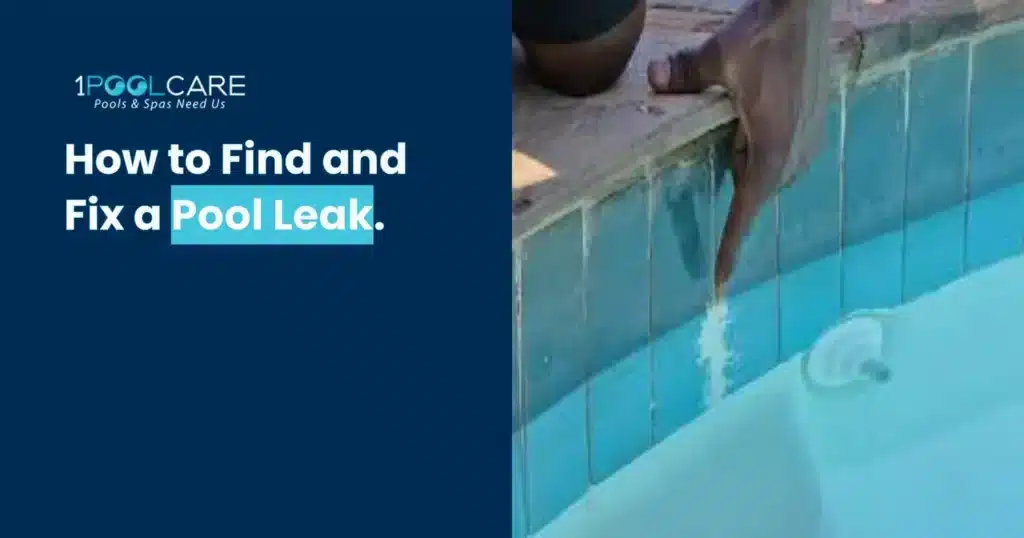
If your pool is losing water and you are unsure where it is going, you may have a leak. Pool leaks can be tricky to diagnose and even harder to fix without the right tools or experience. Whether you have a concrete pool, vinyl pool or fibreglass pool, finding the source of the leak early is key to preventing further damage to your pool, plumbing, or surrounding area.
Common Signs Your Pool Is Leaking
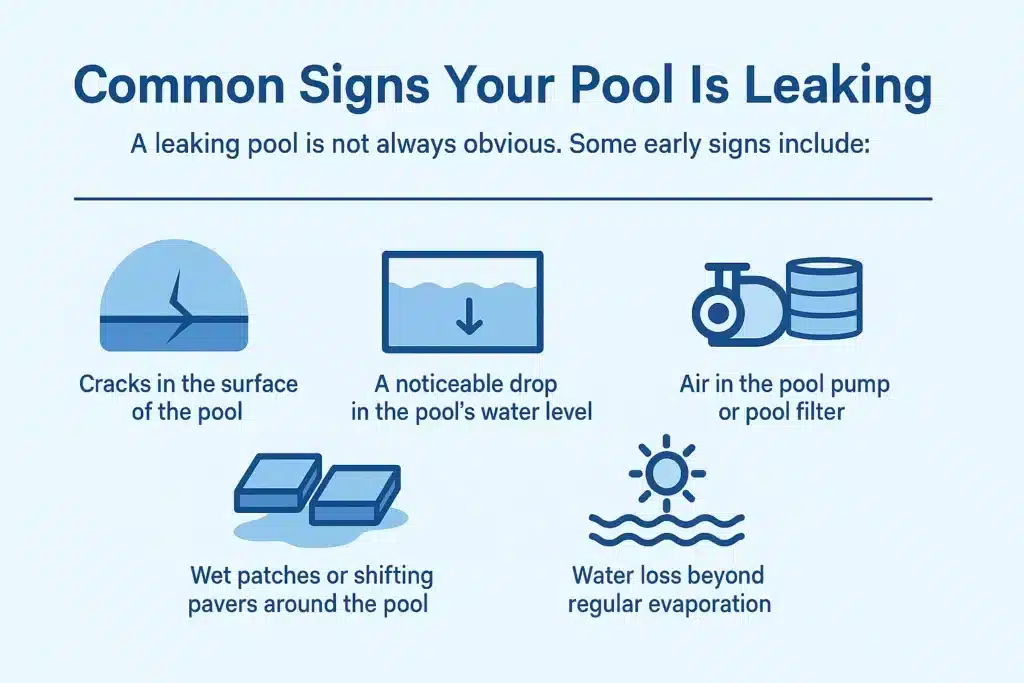
A leaking pool is not always obvious. Some early signs include:
- Cracks in the surface of the pool
- A noticeable drop in the pool’s water level
- Air in the pool pump or pool filter
- Wet patches or shifting pavers around the pool
- Water loss beyond regular evaporation
Checking your filtration system is essential, as undiagnosed issues here can often point to where a leak might exist. Not all leaks are visible, and some may be equipment related or caused by poor workmanship.
Where Does Water Go When a Pool Leaks?
Water from swimming pools can escape through cracks, holes, or plumbing faults. Once out, it may be absorbed into surrounding soil, damage concrete slabs or travel along underground pipes. Skimmer leaks, light leaks and broken return lines are all common culprits.
Leaks also commonly occur in vinyl liner seams, fittings around plastic skimmers, or due to bad conduit connections. A conduit pipe can allow water to leak near pool lights, making it difficult to detect without proper testing.
DIY Methods to Detect a Pool Leak
There are several ways to detect swimming pool leaks using basic household items.
The Bucket Method
This method confirms whether water loss is due to a leak or just evaporation. To perform it:
- Wait 24 hours and compare the levels. This time frame allows for a clear indication of whether water loss is due to a leak or evaporation.
If the pool level is lower than the bucket, your pool is leaking. Identifying leaks early can prevent further complications and costly repairs.
The Ink Method
Use dark food dye and goggles to inspect the suspected area. Swim to the bottom and stay still. Add the dye near areas like the skimmer, light fitting or liner seams. If the colour is drawn in, it indicates a leak. The ink method works well for locating pinpoint leaks in vinyl pools or around fittings.
Common Causes of Pool Leaks
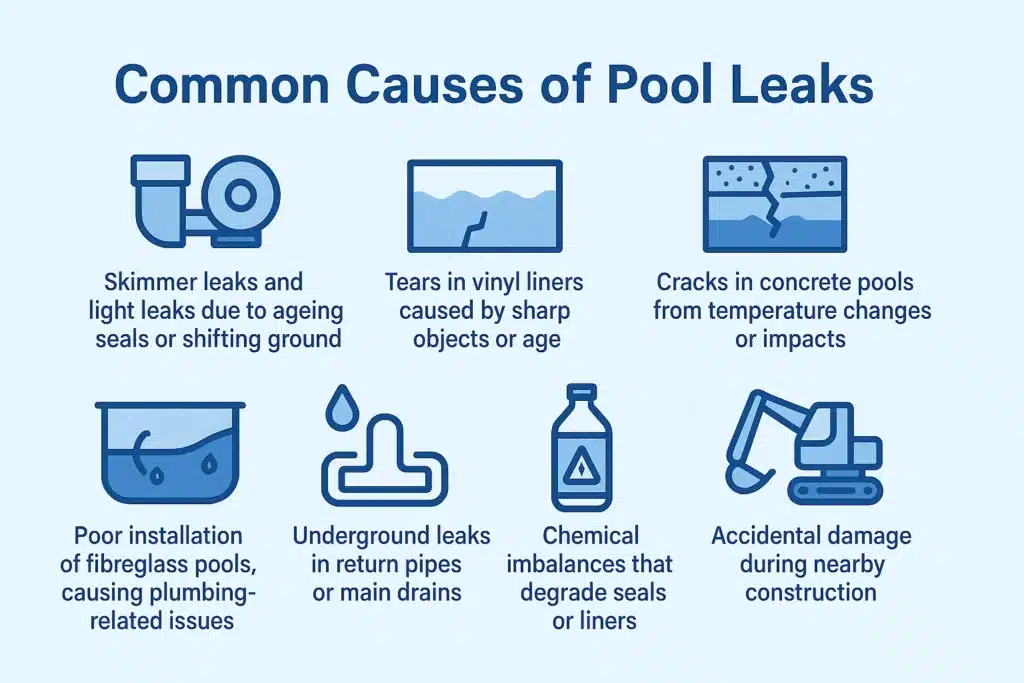
Swimming pools can leak for a variety of reasons. The most common causes include:
- Skimmer leaks and light leaks due to ageing seals or shifting ground
- Tears in vinyl liners caused by sharp objects or age
- Cracks in concrete pools from temperature changes or impacts
- Poor installation of fibreglass pools, causing plumbing-related issues
- Underground leaks in return pipes or main drains
- Chemical imbalances that degrade seals or liners
- Accidental damage during nearby construction
Leaks can occur across all types of pools and must be treated with care to avoid long-term damage.
Fixing Pool Leaks
Once identified, fixing a pool leak depends on the material and location.
Vinyl Pools
For liner leaks or small tears, a vinyl liner patch kit can offer a temporary solution. These are ideal for patching leaks underwater. A wet patch kit also works well for minor holes. However, large tears often require full liner replacement.
Concrete Pools
For minor cracks, apply pool putty or a two part epoxy to seal the area. These products can bond underwater and are suitable for hairline cracks. If structural damage is suspected, contact a pool professional immediately.
Equipment and Plumbing Issues
Leaks from the pool pump, return lines, or filtration system may need a pressure test to locate. These issues typically require professional leak detection and repair to ensure the system is safe and efficient.
When to Call a Pool Professional
DIY methods are helpful, but not always enough. If you cannot locate the leak or suspect damage to your filtration system or conduit pipe, it is time to consult a pool leak detection specialist.
Professional pool leak services use specialised equipment to detect hard-to-find leaks in pool walls, plumbing and fittings. Technicians can check for poor workmanship, offer guarantees, and repair leaks efficiently without causing further damage. This saves time, reduces water loss, and can help avoid expensive repairs down the line.
FAQs About Pool Leaks
How do I know if my pool is leaking or just evaporating?
Use the bucket test. If the pool water level drops more than the bucket’s, it is likely a leak.
Where are pool leaks most likely to occur?
Common areas include skimmers, light fittings, liner seams, and the plumbing system.
Can a pool leak raise my water bill?
Yes. Ongoing leaks mean constant refilling, leading to higher water usage and increased bills.
Can I fix a leak in my pool myself?
You can attempt small repairs using DIY kits, but if the leak source is unclear or in the plumbing, professional assistance is advised.
Final Thoughts
Understanding how to find and fix a pool leak can prevent long-term damage and protect your investment. Start with simple detection methods like the bucket test and ink method. Check the pool pump, pool filter, and filtration system for issues.
Ignoring a pool leak can lead to increased water bills and the need for further repairs. If you suspect your pool is leaking and cannot find the source, contact a qualified pool professional for comprehensive leak detection and repair.
At 1 Pool Care, we help homeowners protect their swimming pools from unnecessary water loss and structural damage with expert service and support.

With over 20 years of industry experience, Adrian Mole is the founder of 1 Pool Care, a leading mobile pool service in Perth. Known for his expert knowledge and reliable service, Adrian delivers professional pool cleaning, equipment repairs, and water balancing across the metro area. Backed by SPASA accreditation, he’s committed to quality, convenience, and customer satisfaction.


Social Media