

Maintaining a swimming pool to be in its best condition is more than simply topping up your pool chemicals. Learning how to shock a pool is one of the most important skills for keeping your swimming pool crystal clear water safe to swim in. With Perth’s warm climate, warm pool water, heavy summer pool usage and odd heavy rain event, algae growth, strong chlorine smell and cloudy water can be rapid. Shocking your pool will rebalance the water chemistry, protect aquatic life and keep family and friends entertained by crystal clear water.
Shocking your pool should be a regular part of your monthly pool maintenance routine. In this article, you will learn exactly how to shock a swimming pool, why pool shocking is important and the simple step-by-step shocking process performed by pool maintenance technicians at 1 Pool Care.
Whether your swimming pool is a chlorine pool or saltwater pool, this pool shocking guide for Perth will have you learning how to shock a pool quickly and easily.
What Does It Mean to Shock a Pool?
When you shock a pool, you are increasing the level of chlorine shock or non chlorine pool shock in your pool water quickly. This jump in free chlorine levels kills bacteria and organic contaminants, destroy chloramines which cause the strong chlorine smell, and removes algae blooms. High combined chlorine levels will often make chlorine not work which is a sign that it’s time to shock the pool and oxidise all of the chloramines.
Regular pool chlorine is formulated to keep chlorine levels at a set and consistent level to sanitise the water on an everyday basis. Shock treatment can be thought of as the reset button for your water chemistry which quickly elevates free chlorine levels to oxidise bacteria and remove algae blooms to make the pool safe for swimming once again.
Why Pool Shocking is Essential
Perth’s conditions are unique for swimming pool owners.
- Warm water speeds up bacterial and algae growth
- Heavy pool usage during summer holidays and pool parties
- Heavy rain can dilute sanitiser levels and upset water balance
- High UV levels make unstabilised chlorine less effective without proper timing
A regular shock treatment will:
- Remove combined chlorine and improve free chlorine levels
- Stop chlorine ineffective situations caused by high cyanuric acid
- Kill algae infestation before it damages pool walls and filtration system
- Protect swimmers from eye irritation and allergic reactions
- Prevent algae from damaging pool filters and other fittings if left unchecked
Types of Pool Shock Products in Australia
When you are learning how much shock to use, it is also important to choose the right type of product for your pool and situation. Lithium hypochlorite shock product dissolves faster but is more expensive and much harder to find due to increased lithium costs.
Pool Shock Product Comparison Table
| Product Type | Main Ingredient | Form | Chlorine Content | Key Benefits | Considerations |
|---|---|---|---|---|---|
| Calcium Hypochlorite (Cal Hypo) | Calcium hypochlorite | Granular | 65–75% | Strong oxidiser, affordable, good for algae infestations | Raises calcium levels, must be dissolved first |
| Dichloroisocyanuric Acid (Dichlor) | Stabilised chlorine | Granular or liquid | 50–60% | Adds chlorine and stabiliser, longer-lasting effect | Can raise CYA too high if overused |
| Liquid Chlorine (Sodium Hypochlorite) | Sodium hypochlorite | Liquid | 12% | Fast-acting, no stabiliser, easy to add | Breaks down quickly in sun, needs larger doses |
| Non Chlorine Shock | Potassium monopersulfate | Granular | 0% | Oxidises contaminants without raising chlorine, swim in 15 mins | Not an algaecide, needs chlorine for algae control |
| Lithium Hypochlorite | Lithium hypochlorite | Granular | ~35% | Dissolves quickly, works in cold water | Expensive and less available |
Step-by-Step: How to Shock a Swimming Pool
The shocking process is simple with these 8 steps.
1. Measure Your Pool Volume
Firstly, it is important to know how much water you have in your pool. In litres. This makes sure that you don’t overdose and you use enough chlorine.
2. Gather Protective Gear
Safety first. Wear chemical resistant gloves, goggles, mask and long sleeves to protect yourself from splashes and fumes whilst adding the chlorine.
3. Test Pool Water Chemistry
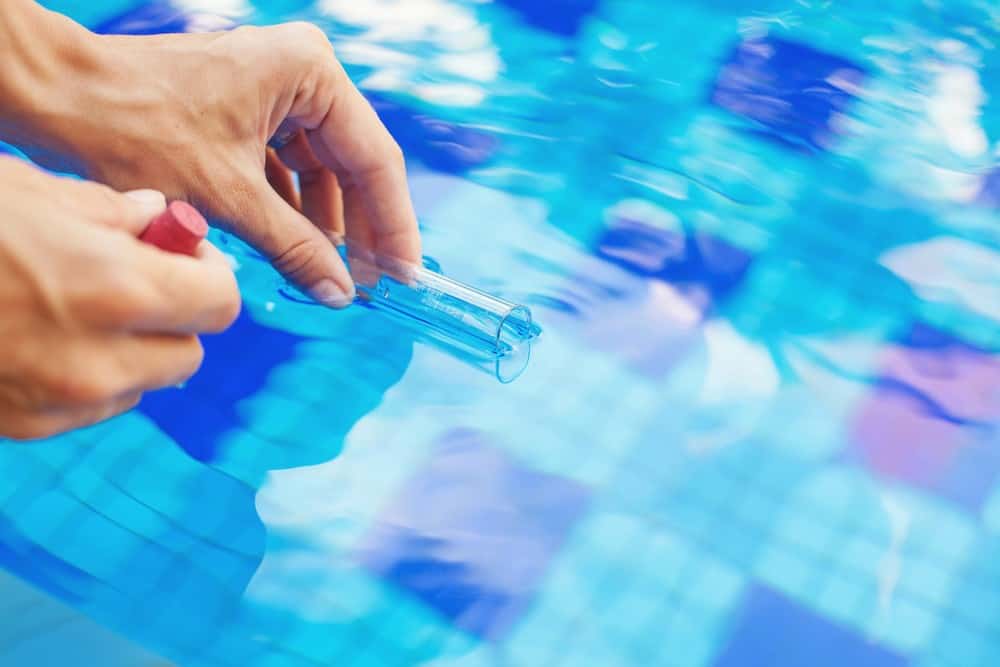
Use a test kit to check the free chlorine, combined chlorine level, total chlorine, and pH level (ideal 7.2–7.6) in your pool. High pH levels will reduce the effectiveness of a shock treatment.
4. Dissolve Granular Chlorine if Required
If using cal hypo or granular chlorine, dissolve in a bucket first and then add shock to prevent bleaching of pool walls. Calcium hypochlorite, or cal hypo, is a granular pool shock that needs to be dissolved in water before adding it to the pool. Dichlor, or dichloroisocyanuric acid, is a chlorine shock with a stabiliser, isocyanuric acid, that dissolves easily in water.
5. Add Shock to the Pool
Turn on the pool pump and slowly add the shock to the pool perimeter. For unstabilised chlorine, this is best to do in the evening to prevent loss due to UV rays. Chlorine shock treatments, such as calcium hypochlorite, must be used at dusk to prevent the sun’s UV rays from degrading the chlorine.
6. Shock Circulate
Turn on the pump so that the shock circulates through the filtration system such as sand filter, cartridge filter or DE filter. For non chlorine shock, 15–30 minutes is fine. For chlorine shock, 8–12 hours is best. Most pool shock products require an eight-hour circulation time after application before you can swim in the pool.
7. Brush Pool Walls and Floor
Use a pool brush to break loose dirt and debris and help kill algae blooms. Brush algae off the walls and floor as it is slippery and can be a hazard when swimming.
8. Test and Rebalance
Test and check free chlorine levels and readjust if needed. Now you are ready to enjoy your sparkling clean swimming pool. 8 hours after shocking is required before swimming if chlorine levels are satisfactory.
How Often Should You Shock Your Pool in Perth?
Most pool owners will benefit from weekly shock treatments during the summer months to keep the water healthy. You should shock your swimming pool the following times:
- After heavy pool use or a pool party
- Following heavy rain
- At the start and end of the swimming season
- After any algae infestation or strong chlorine smell
- You should shock your pool after heavy use, such as a pool party.
Special Tips for Saltwater Pools and Automatic Chlorinators
Saltwater pools still use chlorine from a saltwater pool system. Most of these systems have a super chlorinate function which makes easy work of pool shocking. Do not overuse this function, as it can damage your automatic chlorinator. Saltwater pools need regular shocking as the saline system produces chlorine which will need to be increased after heavy use or rain.
For mineral pools, you can follow the directions from the manufacturer. Use cal hypo or liquid chlorine to restore water balance if the pool has been neglected.
Common Pool Shocking Mistakes
- Adding shock directly to the skimmer which is dangerous for automatic chlorinator units
- Mixing different shock types which can cause volatile chemical reactions
- Shocking during the day when UV breaks down chlorine quickly
- Forgetting to brush after shock treatments which allows algae growth to return
- Avoid adding shock to the skimmer to prevent damage to pool equipment
Safety Notes for Pool Owners
- Always wear protective gear when handling shock products
- Never mix pool chemicals together
- Store chlorine products in a cool, dry, well-ventilated place
- Keep away from children, pets, and aquatic life habitats
Let Us Do the Hard Work
Call in the 1 Pool Care team if you would prefer to leave the hard work up to us. We will manage your pool shocking process and ensure all chemicals are handled safely and correctly and dosed for your pool size to get the water back to sparkling clear. The 1 Pool Care team will ensure the following:
- Correct dosing for your pool volume
- Safe handling of pool chemicals
- Optimal free chlorine levels
- Prevention of algae blooms and eye irritation
- Proper operation of your filtration system and pool pump
Final Word
Shocking your swimming pool is an important process in pool maintenance in Perth. When done correctly, pool shocking will keep the water crystal clear, safe to swim in and looking amazing all year round. By following this step-by-step guide, you will be a pro at how to shock a swimming pool quickly and easily. Shocking your pool is also important to keep the algae away.
Need professional assistance with your pool shocking or general pool maintenance?
Call 1 Pool Care today or book online and we will provide professional service to your home across Perth. Let us manage your pool shocking for you.

With over 20 years of industry experience, Adrian Mole is the founder of 1 Pool Care, a leading mobile pool service in Perth. Known for his expert knowledge and reliable service, Adrian delivers professional pool cleaning, equipment repairs, and water balancing across the metro area. Backed by SPASA accreditation, he’s committed to quality, convenience, and customer satisfaction.





Social Media