
Choosing the right pool cleaner for your swimming pool starts with understanding which features actually matter and which ones exist purely to justify a higher price tag. We have been recommending, fitting and servicing every type of pool cleaner across Perth for over a decade and the features that make the biggest difference to Australian pool owners are not always the ones that get the most prominent placement on the box. This guide answers the questions we hear most from pool owners comparing robotic pool cleaners against traditional pool cleaners, and covers the features, benefits and practical considerations that help you choose the best pool cleaner for your pool type, pool size and budget. For our full range of recommendations, see our pool cleaner page.
How Do Robotic Pool Cleaners Work
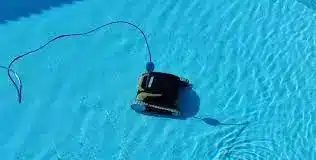
Robotic pool cleaners operate independently of your pool pump and filtration system by using a low voltage power supply, onboard drive motors and a built in filter basket to vacuum and scrub pool surfaces. Smart sensors map the pool to select the most efficient cleaning path and adjust speed and direction during each cleaning cycle. Many models offer app control so you can start a cycle, set timers and review filter status from your phone. Premium models include dual scrubbing brushes that dislodge biofilm and fine dirt from the pool floor and pool walls while the vacuum captures debris in the onboard basket.
Each cycle the robot drives across the pool floor and climbs walls to the waterline, scrubs with rotating brushes to remove dirt and biofilm, vacuums debris through an internal filter basket, and circulates pool water to improve overall hygiene. The cleaning process is systematic rather than random, which means robotic cleaners cover the entire pool including curved walls, tight corners and steps in a single cleaning session. We fitted a Dolphin S200 on a pool in Ellenbrook where the owner had been spending over an hour each weekend on manual cleaning and was genuinely fed up with it. She told us the pool had gone from being the best part of the house to feeling like a chore. The robot handled the pool floor walls and waterline in under two hours with no effort beyond rinsing the basket afterwards, and within a fortnight the family was using the pool more than they had in the previous six months.
Are Robotic Pool Cleaners Better Than Suction Or Pressure Cleaners
For most Australian pools, yes. Robotic cleaners deliver superior cleaning performance, filter more effectively and use less energy than suction pool cleaners or pressure cleaners. Traditional suction side pool cleaners rely on the pool’s filtration system and reduce skimmer box performance because all debris passes through the pump and filter. Pressure side pool cleaners need a booster pump that raises energy consumption. A robotic pool cleaner has its own filter and cleaning power, so it removes debris without loading the pool’s filtration system.
The differences that matter most are cleaning speed and coverage where pool robots follow a planned route and rarely miss spots, filtration load where robots trap debris in the unit which means fewer backwashes and less wear on the main filter, and energy usage where robots draw far less electricity compared to running a booster or the pool pump at high speed. Suction side cleaners and pressure cleaners still have their place for specific setups and budgets, but for overall cleaning performance and energy efficient operation, robotic cleaners outperform both categories consistently. That gap widens further on Perth pools dealing with bore water sediment and windblown coastal sand, where the extra filtration load from a suction setup accelerates wear on pumps and cartridges. For a detailed comparison, see our guide on robotic pool cleaner vs suction.
What Are The Advantages Of Using A Robotic Pool Cleaner
The best robotic pool cleaners handle the hard work that most pool owners would rather not think about, and they do it at a lower running cost than other pool cleaners. The key benefits include better debris removal from floors and walls including fine dirt, fine debris, floating debris and larger debris, energy efficiency thanks to low power consumption and independent motors, cleaner pool water with fewer backwashes and less strain on the pool’s filtration system, time saved on labour intensive pool maintenance tasks so you spend more time enjoying the pool, and convenience with plug in simplicity and quick access filter baskets. These advantages apply to most pool shapes and pool sizes, from smaller pools to larger pools.
Do Robotic Pool Cleaners Save Energy
Yes. Energy efficient models draw about the same power as a light globe while they clean. Because the robot collects debris in its own basket, you can run your pool pump at lower speed for filtration and see fewer backwashes, which saves water and energy. The reduction in electricity bills is noticeable on pools where the owner previously ran the pump at high speed for suction cleaning or used a booster pump for a pressure cleaner.
We measured the difference on a client’s pool in Waikiki where they switched from a suction cleaner requiring four hours of high speed pump time to a robotic cleaner drawing under 200 watts. The energy consumption dropped significantly and the pool stayed cleaner because the robot’s onboard filtration captured fine particles that the suction created by the pump had been pushing past the skimmer. Energy efficient operation is one of the strongest arguments for upgrading to a robotic cleaner, particularly for pool owners running their pump longer than necessary just to power a suction cleaner.
Can Robotic Pool Cleaners Clean Steps And Walls
Many models climb walls and handle waterline cleaning effectively, and some manage steps and benches. Look for models with strong traction, multi directional drive and active scrubbing brushes. The ability to climb walls matters because a pool left with walls untouched develops biofilm and algae faster than one where the cleaner covers the full surface. The best robotic pool models handle curved walls as well as straight ones, which suits the freeform pool shapes common across Perth backyards.
If steps are your priority, check the product specifications and choose a cleaner designed to handle complex shapes. Not every robot navigates steps cleanly, so matching the model to your pool’s specific layout avoids disappointment. For more on matching cleaners to different pool types, see our guide on what pool cleaner should you buy.
Is A Robotic Pool Cleaner Worth The Investment
For most pool owners, yes. Robotic cleaners reduce manual cleaning time, improve water quality and protect pool equipment. By removing debris before it reaches the main filter, the robot lowers pressure and wear, which helps extend the life of the pool pump and filter over a decade or more of use. Over a season, the time saved and the reduction in chemicals and backwashing offset the purchase price for many households.
The value is clearest on larger pools and pools with heavy debris loads where manual cleaning eats into your weekend. There is a real difference in how people feel about their pool when it stays clean without constant effort. You stop dreading the maintenance and start actually using it. The filtration system runs cleaner with fewer pressure spikes, the pool stays clearer between services which reduces the risk of emergency callouts, and the overall cost of ownership drops. For a backyard pool that gets regular use through the swimming season, a robotic cleaner pays for itself through lower maintenance costs, reduced energy consumption and better water quality.
Are Robotic Pool Cleaners Safe For All Pool Surfaces
Most modern robotic pool cleaners are safe for plaster, pebblecrete, vinyl and fibreglass pools. The key is choosing brushes that match your surface materials. For fibreglass and vinyl, use soft foam or gentle composite brushes that clean without scratching. For rough pebblecrete and concrete, most models use robust scrubbing rollers that provide strong scrubbing power without damaging the finish. Always check the manufacturer’s guidance for your specific surface before running the cleaner. Perth pools are predominantly fibreglass and pebblecrete, and we service robotic cleaners on both surfaces across the metro area without issues when the correct brush type is fitted.
How Much Maintenance Do Robotic Pool Cleaners Need
Maintenance is minimal compared to suction pool cleaners and pressure cleaners that require more maintenance on the pump, filter and hose connections. After each cleaning cycle, remove the filter basket, tip out debris and hose the mesh to restore flow. Inspect the cable for kinks and rinse the cleaner with fresh water, especially after heavy chemical treatments. Replace wear items like brushes and tracks when they show smooth edges or reduced traction.
Store the cleaner and power supply out of direct sun when not in use. Perth UV degrades rubber and plastic fast, and we have replaced more cracked cables and brittle drive tracks caused by sun exposure than by any other single issue. A shaded storage spot or a simple cover protects the unit between uses and adds years to the components. For a complete care routine, see our pool cleaner maintenance and care tips.
What Size Pool Suits A Robotic Pool Cleaner
There are models for small plunge pools through to large in ground pools. Match cable length and cleaning cycle time to your pool size. For an inground pool over 50,000 litres, look for longer cables and robust motors that handle the distance without stalling. For an above ground pool or smaller pools under 30,000 litres, compact energy efficient models cover the area in a shorter cycle. Large pool owners should look for longer cables or cordless models with sufficient battery life to complete the pool in a single pass. For help matching a model to your pool, see our guide on types of pool cleaners.
Can Robotic Pool Cleaners Remove Algae
Robotic cleaners help remove dead algae and biofilm but you still need correct chemistry to kill live algae. Use shock treatment to sanitise the pool water, then let the robot collect the remaining algae and fine dirt from pool surfaces. Active scrubbing improves results by lifting material off the surface so the vacuum can capture it. Running the robot after a shock treatment clears the dead algae faster than relying on the filtration system alone, which helps the pool return to optimal cleanliness sooner. For more on dealing with algae, see our guide on how to fix a green pool.
Do Robots Reduce Chemical Consumption And Improve Water Quality
Yes. By removing organics and dirt that consume chlorine, robotic cleaners help maintain stable free chlorine levels and reduce the need for corrective chemical doses. Cleaner pool water needs fewer clarifier treatments and less acid to balance pH. Regular robotic cleaning supports consistent water chemistry between services, which prevents algae growth and keeps the pool safe for swimming. The improvement in water quality is one of the changes Australian pool owners notice most after switching from a suction cleaner to a robotic model. Clearer water also means the pool looks inviting rather than something you walk past on the way to the back door.
How Do You Choose The Right Model For Your Pool
Match features to your pool’s specific shape, debris load and usage patterns. Pool shapes with complex features like beach entries, curved walls and benches need agile models with smart features and strong traction. Heavy leaf loads call for large baskets and wide intakes, while fine dust and sand need ultra fine cartridges. Advanced features like app control, programmable schedules and quick release baskets speed up pool care for busy households. Choose brands with local support and available parts so servicing is straightforward when components eventually wear.
Consider your pool type and what collect debris challenges you face. Australian pools in coastal areas deal with sand and salt. Pools under eucalyptus and melaleuca deal with oily leaves and bark. Pools on bore water deal with mineral laden sediment. Matching the cleaner’s features to your specific conditions delivers the best results and longest service life.
Bottom Line
Robotic pool cleaners bring clear benefits to pool ownership. They operate independently, filter as they scrub, and deliver thorough cleaning on floors and walls while using less energy than automatic pool cleaners that rely on the pool pump. With models available for every pool size, surface and budget, a well chosen robotic cleaner cuts pool maintenance time, protects your filtration system and keeps your swimming pool consistently clean with far less effort. If you want help choosing the right pool cleaner for your setup or need advice on which features matter most for your pool, get in touch with our team. We recommend, fit and service every type of pool cleaner across Perth and can match the right model to your pool so it stays clean through every season.

With over 20 years of industry experience, Adrian Mole is the founder of 1 Pool Care, a leading mobile pool service in Perth. Known for his expert knowledge and reliable service, Adrian delivers professional pool cleaning, equipment repairs, and water balancing across the metro area. Backed by SPASA accreditation, he’s committed to quality, convenience, and customer satisfaction.


Social Media