

Choosing the right size heat pump for your swimming pool is essential to enjoy comfortable water temperatures year round without wasting energy or money. Selecting an undersized unit can lead to inefficient heating, while oversizing can increase upfront costs without added benefits. In this comprehensive guide, we will help you understand pool heat pump sizing, including how to match heat pump capacity to pool volume, regional climate, and usage habits.
Understanding Pool Heat Pump Sizing
Pool heat pump sizing refers to the process of matching the heating capacity of the pump to the specific requirements of your swimming pool. Measured in kilowatts, the capacity determines how effectively a unit can heat a given volume of pool water. Factors such as pool size, average depth, local climate, swimming season, and whether the pool is covered all affect the ideal heat pump size.
It takes approximately 1.16 watt hours to heat one litre of water by one degree. The ideal temperature for swimming is usually between 24 to 28 degrees Celsius.
Why Correct Sizing Matters
An undersized heat pump will struggle to maintain your desired temperature, especially during colder periods, resulting in longer run times, greater heat loss, and increased energy bills. An oversized pump may cycle on and off too frequently, reducing efficiency and lifespan. Correct sizing ensures faster pool heating, lower running costs, and consistent performance.
Factors That Affect Pool Heat Pump Sizing

1. Pool Volume
The larger your pool, the more kilowatts required to heat the pool water efficiently. Pool volume is typically measured in litres.
To calculate pool volume: Volume = Length x Width x Average Depth x 1000
2. Desired Temperature Increase
The difference between current water temperature and set temperature determines the heating load. Heating a pool from 18 to 28 degrees Celsius requires more energy than from 24 to 28.
3. Local Climate and Air Temperature
The outside air temperature influences efficiency. Heat pumps are more energy efficient in warmer climates. Pools located in windy or cooler regions require more power to overcome greater heat loss. If you live in cooler regions, you will likely need a larger heat pump.
4. Pool Usage and Swimming Season
Pools used year round or for extended swimming seasons demand a higher capacity unit to meet the heat pump sizing requirement.
5. Use of Pool Cover
Using a pool cover helps retain water temperature and reduces heat loss. Covered pools require less energy to maintain heat, allowing for a smaller unit. Using a thermal pool cover reduces heat loss and minimises the workload on the heat pump.
General Sizing Guide by Pool Volume
Use this guide as a starting point for determining what size heat pump for pool is ideal:
| Pool Volume (Litres) | Recommended Heat Pump Size |
|---|---|
| 30,000 litres | 9 to 12 kilowatts |
| 40,000 litres | 12 to 18 kilowatts |
| 50,000 litres | 18 to 22 kilowatts |
What Size Heat Pump for 30,000 Litre Pool?
In most cases, a 12kw pool heat pump will meet the pool heating requirements for a 30,000 litre outdoor pool. Pools in cooler climates or those used in winter may need a 14 kilowatt unit.
What Size Heat Pump for 40,000 Litre Pool?
A pool of this size typically requires an 18kw pool heat pump to maintain water temperature and reduce heating costs.
What Size Heat Pump for 50,000 Litre Pool?
This pool volume needs at least a 20 to 22 kilowatt unit. The right heat pump size depends on pool location, use of a cover, and how much power is needed to reach one degree Celsius rise per hour.
Pool Heat Pump Size and Efficiency
Energy efficiency is measured by the Coefficient of Performance (COP factor). A high average COP means better energy savings. Proper sizing keeps the unit operating at full capacity for the best energy efficient output. Humidity levels and outdoor temperature also influence the COP of heat pumps.
Sheltered pools experience less temperature fluctuation, which allows for more efficient heat pump operation. Pools exposed to direct sunlight retain heat better, reducing demand on the pump. Wind exposure can significantly affect performance, necessitating larger units in windy areas.
Step by Step Sizing Process
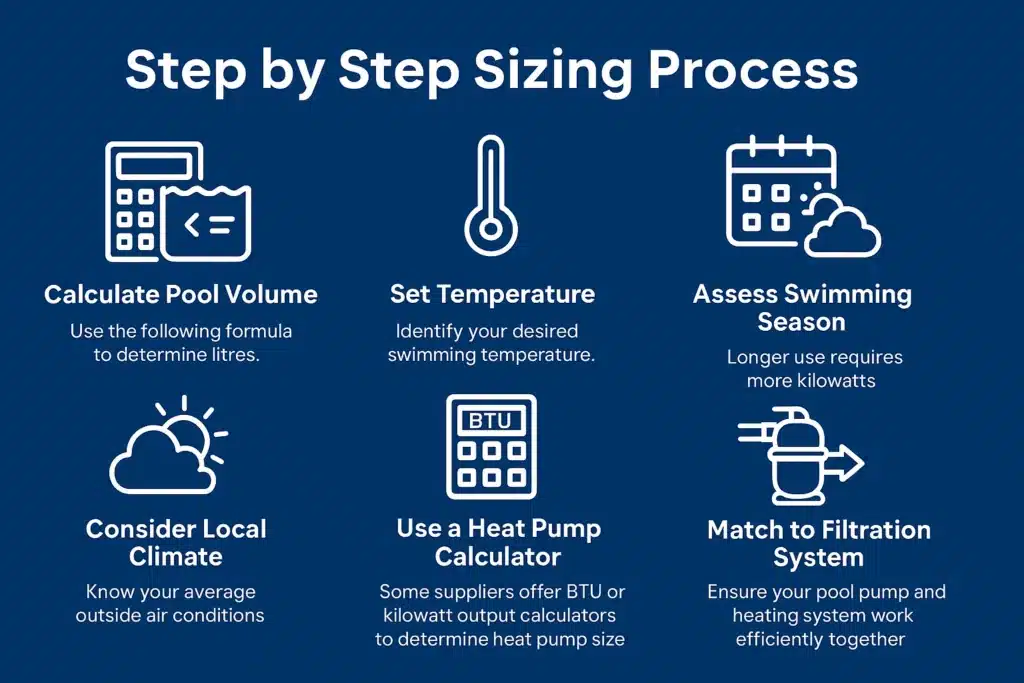
- Calculate Pool Volume: Use the following formula to determine litres.
- Set Temperature: Identify your desired swimming temperature.
- Consider Local Climate: Know your average outside air conditions.
- Assess Swimming Season: Longer use requires more kilowatts.
- Use a Heat Pump Calculator: Some suppliers offer BTU or kilowatt output calculators to determine heat pump size.
- Match to Filtration System: Ensure your pool pump and heating system work efficiently together.
Inground vs Above Ground Pools
Above ground pools are more exposed to wind exposure and have more heat loss. These may need a slightly larger heater compared to an inground pool of the same volume.
Spa or Plunge Pool Sizing
Smaller pools require a unit that can quickly raise the water temperature. A 12kw pool heat pump is often ideal for plunge pools under 10,000 litres. Faster heating means less energy used.
12kW or 18kW Pool Heat Pump?
When deciding between a smaller heat pump or a larger heater, consider:
- 12kw is best for pools up to 35,000 litres with a cover or located in warmer climates.
- 18kw is recommended for pools up to 50,000 litres or when used without a cover.
Types of Pool Heat Pumps
There are two types of electric heat pumps for pools: on/off heat pumps and full inverter heat pumps. On/off heat pumps operate by switching off when the temperature is reached and switching back on when the water cools. Full inverter heat pumps automatically self-regulate their speed and are more energy efficient than on/off models. Inverter pool heat pumps usually have a better Coefficient of Performance (COP) than on/off heat pumps. Electric heat pumps can achieve a COP ranging from 5 to over 12, with inverter models often being the most efficient. Heat pumps are generally more efficient than traditional gas heaters because they transfer existing heat from the air.
Cost and Savings of Pool Heat Pumps
Pool heat pumps can reduce yearly running costs and cut carbon emissions compared to traditional heating methods. Electric heat pumps can provide annual energy savings of up to 400 dollars when used year round at ideal temperatures. Using a thermal pool cover with a heat pump can minimise energy costs and improve heat retention. Heat pumps operate more efficiently when the air temperature is warmer, leading to lower energy bills during warm weather. They use cleaner heat compared to gas heaters, producing no carbon monoxide. Heat pumps are cost effective for maintaining consistent pool temperatures over time, leading to substantial energy savings.
Installation and Maintenance of Pool Heat Pumps
Pool heat pumps should be installed by a professional to avoid voiding the warranty. The location of the pool heat pump should allow for good airflow with no obstacles around the fan. Once installed, the heat pump will only start working when it detects water from the pump going through the unit. Regular maintenance of the air intake area is necessary to ensure efficiency. Inspecting water inlets and outlets for leaks or condensation is also important. Yearly professional checks of the heat pump can help identify hidden issues and improve performance. Algae can reproduce quickly in warmer water, requiring more frequent shocking if the temperature exceeds 28 degrees Celsius. Clear the air intake and inspect for debris regularly to maintain optimal performance.
Conclusion: What Size Pool Heat Pump Do I Need?
Understanding pool heat pump sizing ensures that your pool water stays warm during your entire swimming season. With the right heat pump, you will enjoy energy savings, better performance, and long term value. Whether you need help choosing a 12kw or 18kw unit, or want to explore options beyond electric heat pumps, our experts at 1 Pool Care can help.
If you are unsure what size pool heater do I need, or how much power your pool heating needs require, contact 1 Pool Care for tailored advice.

With over 20 years of industry experience, Adrian Mole is the founder of 1 Pool Care, a leading mobile pool service in Perth. Known for his expert knowledge and reliable service, Adrian delivers professional pool cleaning, equipment repairs, and water balancing across the metro area. Backed by SPASA accreditation, he’s committed to quality, convenience, and customer satisfaction.


Social Media